
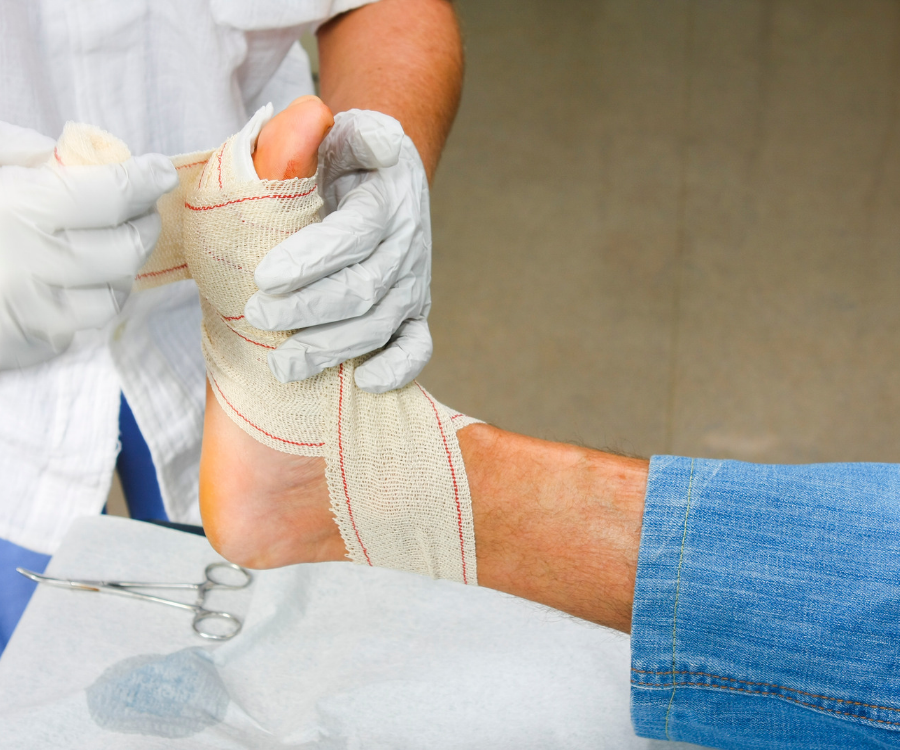
Why Some Foot Wounds Take Longer to Heal: Causes, Risks, and Solutions
A small cut, scrape, or blister on your arm or shoulder usually scabs over and disappears within a couple of weeks. But when the same minor break in the skin happens on your foot, the healing process can stall entirely.
For millions of people, a simple foot lesion can linger for weeks—sometimes months—without visible improvement. Left untreated, slow-healing wounds risk deep tissue infection, bone involvement (osteomyelitis), or worse.
Understanding why feet are uniquely vulnerable, what stalls the biological repair process, and when to seek clinical intervention can prevent a minor irritation from turning into a severe medical complication.
The Natural Wound Healing Cycle
To understand why a wound stalls, it helps to look at how skin normally repairs itself. Normal tissue healing moves through four distinct, overlapping stages:
- Hemostasis: Blood vessels constrict and platelets aggregate to form a clot, halting blood loss.
- Inflammation: White blood cells (neutrophils and macrophages) flood the area to destroy bacteria, clear cellular debris, and release growth factors.
- Proliferation: The body rebuilds the tissue matrix using collagen, forms new microscopic blood vessels (angiogenesis), and pulls the wound margins together.
- Maturation (Remodeling): New collagen fibers reorganize, increasing the tensile strength of the newly formed skin.
In chronic or non-healing foot wounds, the biological sequence almost always gets trapped in the inflammatory phase. Cellular waste accumulates, bacterial bio-burden rises, and the body cannot produce the healthy granulation tissue required to close the wound.
5 Primary Reasons Foot Wounds Stall
The feet operate under extreme biomechanical and anatomical disadvantages compared to the rest of the body. Here are the most common clinical factors that delay healing:
1. Compromised Blood Circulation (Peripheral Artery Disease)
Healing demands fuel. Oxygen, immune cells, amino acids, and therapeutic antibiotics reach an injury via the bloodstream.
Because the feet sit at the farthest anatomical point from the heart, any compromise in arterial blood flow hits them hardest:
- Atherosclerosis and PAD: Narrowed or hardened arteries sharply reduce the delivery of oxygen-rich blood to the extremities.
- Tissue Hypoxia: Without adequate local oxygen levels, fibroblasts cannot synthesize collagen, and white blood cells cannot effectively fight off bacteria.
- Venous Insufficiency: If veins fail to pump blood back up toward the heart, fluid pools in the lower extremities (edema). Chronic swelling puts pressure on the capillary beds, starving skin cells of vital nutrients.
2. Neuropathy and the Absence of Pain Signals
Pain is the body’s primary defense mechanism. When an area hurts, you instinctively pull away or stop bearing weight on it.
In individuals with peripheral neuropathy—most commonly caused by diabetes, nerve compression, or chronic alcohol use—the sensory nerves in the feet deteriorate:
- Patients often do not feel a small pebble in their shoe, a tight seam rubbing against a toe, or a developing blister.
- Because the injury goes unnoticed, the person continues to walk on it, compounding tissue trauma before any treatment begins.
- Repetitive impact prevents fragile new blood vessels from forming.
3. Constant Pressure and Mechanical Shear Stress
Even with intact sensation, the physics of walking works against wound recovery. Every step exerts compressive pressure and lateral shear stress across the soles, heels, and toes.
Without targeted offloading (reducing weight-bearing pressure on the affected area), walking repeatedly breaks open the delicate layer of newly formed epithelial cells, resetting the healing clock every single day.
4. Microbial Biofilms and Subclinical Infection
All chronic wounds contain bacteria, but slow-healing wounds frequently harbor biofilms—slimy, complex colonies of microorganisms embedded in a self-produced protective matrix.
- Biofilms shield bacteria from both topical disinfectants and oral antibiotics.
- They maintain a state of continuous low-grade inflammation that degrades local growth factors.
- Unlike an acute, bright-red infection, a biofilm-laden wound may simply look dull, pale, or yellowish without typical warning signs like a high fever.
5. Systemic Health and Nutritional Deficiencies
Wound closure is a high-energy metabolic process. Several systemic conditions directly disrupt skin synthesis:
- Elevated Blood Glucose: High circulating sugar stiffens arterial walls, impairs red blood cell deformability, and blunts immune response.
- Protein and Micronutrient Deficiencies: Insufficient intake of high-quality protein, zinc, and vitamins A and C deprives fibroblasts of the raw building blocks needed for tissue matrix reconstruction.
- Immunosuppression & Medications: Long-term use of corticosteroids, chemotherapy agents, or nonsteroidal anti-inflammatory drugs (NSAIDs) can suppress the cellular cascades necessary for repair.
Warning Signs: When a Foot Wound Needs Immediate Clinical Care
A foot injury should never be left on a “wait and see” approach if standard home first aid does not yield clear progress within 5 to 7 days.
Schedule an evaluation with a podiatrist, wound care specialist, or primary care physician immediately if you observe any of the following:
| Symptom | What It Indicates |
| No size reduction after 1–2 weeks | The wound is stalled in the chronic inflammatory phase. |
| Spreading redness, warmth, or swelling | Cellulitis or advancing soft tissue infection. |
| Foul odor or dark/greenish drainage | High bacterial bio-burden or tissue necrosis. |
| Black, dark brown, or leathery tissue (eschar) | Dead, non-viable tissue that blocks healing and fosters anaerobic bacteria. |
| Numbness or localized loss of feeling | Sensory nerve involvement requiring immediate offloading. |
| Deep visibility (tendon, joint, or bone) | Medical emergency; high risk of osteomyelitis. |
Evidence-Based Approaches to Restoring the Healing Process
Modern wound care focuses on identifying the root cause rather than merely covering the surface. Standard clinical treatments include:
Professional Debridement
A specialist uses sharp instruments, enzymes, or ultrasound devices to remove dead skin, necrotic tissue, and bacterial biofilms. This turns a stagnant, chronic wound bed back into an active, acute wound capable of normal cellular repair.
Specialized Offloading Techniques
Relieving pressure from the wound site is non-negotiable. Modalities include:
- Custom total contact casts (TCC), regarded as the gold standard for plantar ulcers.
- Removable cast walkers with customized insole cutouts.
- Custom orthotic inserts designed to divert pressure away from bony prominences.
Advanced Moist Wound Dressings
Drying out a wound with rubbing alcohol or letting it “air out to form a hard scab” is outdated advice. Skin cells migrate up to four times faster across a properly balanced, moist environment. Depending on moisture levels, clinicians utilize:
- Hydrogels: To donate moisture to dry, necrotic wounds.
- Alginates & Hydrofibers: To absorb heavy exudate and maintain moisture balance without macerating adjacent skin.
- Collagen matrices & Antimicrobial dressings: To neutralize harmful enzymes and manage local bacterial loads.
Vascular Optimization
If peripheral artery disease is present, local wound therapies will fail until arterial inflow is restored. Vascular specialists utilize minimally invasive angioplasty, stenting, or surgical bypass to re-establish blood flow to the lower extremity.
Proactive Habits for Daily Foot Protection
Preventing a foot ulcer is vastly simpler than healing one. Incorporate these foundational habits into your daily routine:
- Perform a Daily Mirror Check: Inspect the bottoms of your feet, heels, and between your toes every evening. If mobility is limited, place a hand mirror on the floor or ask a family member for assistance.
- Choose Protective Footwear: Never walk barefoot, even indoors. Wear well-fitted shoes with a wide toe box and cushioned soles to avoid friction points.
- Wash and Dry Carefully: Wash feet daily with lukewarm water and mild soap. Dry thoroughly, particularly between the toes, where excess moisture can cause skin breakdown and fungal infections.
- Moisturize Strategically: Apply a quality urea- or ceramide-based cream to the tops and bottoms of the feet to keep skin supple and crack-free, but avoid the spaces between the toes.
- Trim Nails Straight Across: Avoid rounding the edges, which can lead to ingrown toenails and localized infections.



No comment