
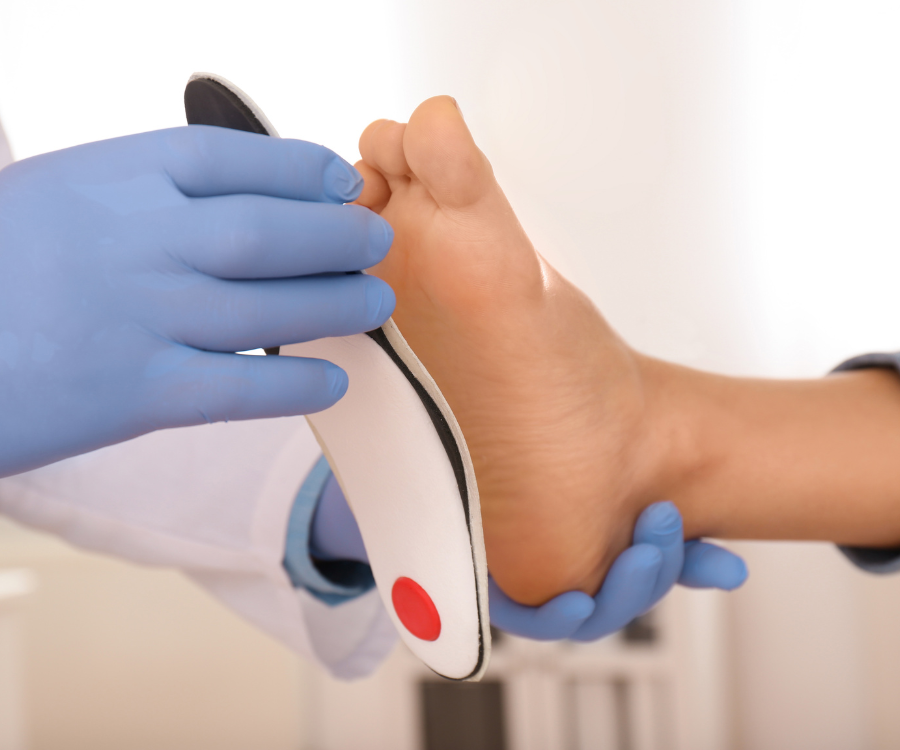
If you’ve ever dealt with nagging knee pain after a long run, shin splints during a football match, or that agonizing first-step heel pain in the morning, someone has probably whispered the word orthotics in your ear.
But when you look into them, you hit a massive fork in the road. On one side, you have a R150 pair of gel insoles from the local pharmacy. On the other, you have a medical-grade pair of custom sports orthotics that can easily cost upwards of R3,000 to R5,000 once you factor in the podiatrist visit.
This leaves every athlete and weekend warrior asking the exact same question: Are sports orthotics actually worth it, or are they just a high-tech placebo?
Let’s cut through the marketing fluff and look at the real science, the mechanics, and when you should actually spend your hard-earned money.
What Do Sports Orthotics Actually Do?
There is a common misconception that orthotics act like a cushion to make your shoes softer. If you just want a plush feel, you don’t need orthotics—you just need a cushioned shoe.
True sports orthotics are functional devices. Think of them as steering alignment for your body. When you run, your foot absorbs roughly three to five times your body weight with every single step. If your foot rolls inward too much (overpronation) or stays too rigid (supination), that massive force doesn’t just disappear. It travels straight up your kinetic chain into your shins, knees, hips, and lower back.
Orthotics work by changing the ground reaction forces. They don’t permanently “fix” a flat foot, but they alter how your muscles and tendons fire when you move, redistributing pressure and reducing the strain on tissues that are working too hard.
Over-the-Counter vs. Custom: The Real Difference
Before dropping serious cash, it’s vital to understand what you’re paying for.
1. Over-the-Counter (OTC) Inserts
These are mass-produced shapes based on general averages. They are typically made of soft foam or gel.
- The Verdict: They are great for general comfort and mild fatigue. If you have structurally normal feet and just want a bit more arch support in your running shoes, a high-quality OTC insert (like Superfeet or Orthaheel) can work wonders for a fraction of the price.
2. Custom Medical Orthotics
These are crafted from a dynamic 3D scan or physical cast of your foot, specifically tailored by a podiatrist. They are built from high-tech, rigid or semi-rigid materials like carbon fiber or specialized polymers.
- The Verdict: They don’t just fill a gap; they are calibrated to control specific joint motion. If your left foot biomechanics are completely different from your right foot (which is incredibly common), custom is the only way to address that asymmetry.
The Checklist: When Are They Worth It?
Orthotics are absolutely worth the investment if you fall into specific categories. They are medical tools, not performance enhancers for healthy, pain-free athletes.
| Highly Worth It If… | Skip Them (Or Go Cheap) If… |
| You have chronic, recurring injuries (e.g., Plantar Fasciitis, Achilles Tendonitis, Iliotibial Band Syndrome). | You are currently completely pain-free and just want to “prevent” hypothetical future injuries. |
| You have a severe structural abnormality, like structural flat feet or a distinct leg-length discrepancy. | You just bought a new pair of running shoes and want them to feel a little bit softer. |
| You are a high-mileage athlete whose biomechanical flaws get amplified by sheer volume. | You have mild, temporary soreness that can be resolved with basic rest, stretching, or strength training. |
The “Dark Side” of Orthotics: When They Do More Harm Than Good
Here is a piece of candor you won’t always hear in a clinic: relying on orthotics too early can sometimes mask a deeper issue.
If your arch is collapsing because your intrinsic foot muscles and calves are incredibly weak, slapping an orthotic underneath it acts like a permanent crutch. The foot doesn’t have to work, so it gets even weaker.
The most successful approach to sports orthotics is to view them as a temporary transition tool or part of a broader rehab puzzle. While the orthotic reduces the acute strain so you can stay active without pain, you should actively work on:
- Strengthening your feet and ankles.
- Improving hip and glute stability (which heavily dictates how your knee and foot track).
- Ensuring your athletic footwear actually matches your sport and foot type.
The Bottom Line
Are sports orthotics worth it?
If you are dealing with chronic pain that keeps sidelining you from the sport you love, and a biomechanical assessment shows a clear misalignment—yes, custom orthotics are worth every cent. They can mean the difference between sitting on the couch frustrated or setting a new personal best.



No comment