
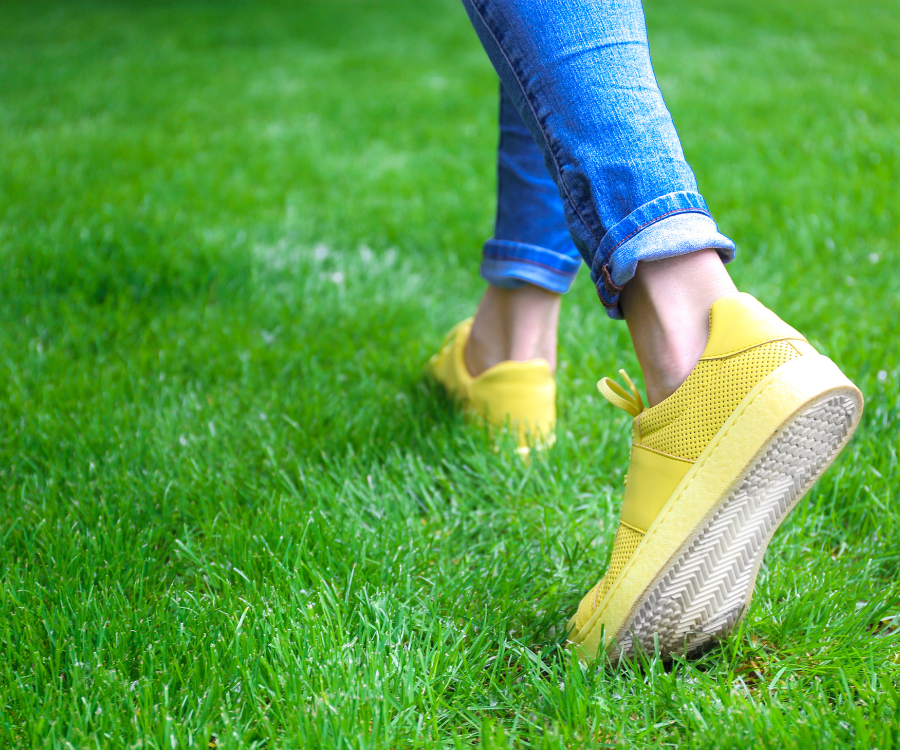
Can Your Shoes Change the Way You Walk? What Science Says About Your Gait
We spend a lot of time thinking about how our shoes look, but how often do we consider what they are doing to our bodies?
You slide them on, head out the door, and don’t give them another thought—until your heels throb, your shins ache, or your lower back starts to feel tight at the end of the day.
It turns out your footwear choice isn’t just a matter of fashion or simple comfort. There is a deep, fascinating connection between your shoes and your gait cycle (the scientific term for the way you walk). Recent biomechanical research shows that the shoes you wear actively alter your movement patterns, shifting pressure up your entire musculoskeletal system.
Let’s break down exactly how your footwear changes the way you walk, and what it means for your long-term joint health.
1. The Anatomy of a Step: Understanding the Gait Cycle
To understand how a shoe changes your walk, it helps to understand how you walk naturally. A healthy, unconstrained stride follows a highly coordinated sequence:
- Heel Strike: Your heel makes initial contact with the ground, absorbing the first wave of impact.
- Midfoot Stance: Your body weight transfers smoothly through the middle of the foot as it flattens slightly to distribute pressure.
- Propulsion (Push-Off): Your toes splay out wide, and your big toe digs in to push your body forward into the next step.
When this cycle is unhindered, your body naturally minimises joint strain and balances coordination. But the moment you introduce structural features like thick foam, elevated heels, or narrow toe boxes, that natural rhythm changes.
2. Three Common Ways Shoes Alter Your Mechanics
Different types of footwear force your body to compensate in distinct ways. Here is how three popular shoe styles change your biomechanics:
High Heels and Elevated Drops: The Forward Shift
Whether it’s a formal high heel or a modern running sneaker with a massive heel drop (the difference in height between the heel and the forefoot), an elevated heel fundamentally shifts your center of gravity.
To keep from falling forward, your body automatically compensates by tilting the pelvis, arching the lower back, and bending the knees slightly more than normal. This puts immense, prolonged pressure on the balls of your feet and forces your calf muscles into a chronically shortened state, which can eventually lead to Achilles tendon stiffness and chronic lower back fatigue.
Overly Cushioned “Max” Shoes: The Sensory Block
Plush, ultra-soft maximalist shoes feel like walking on clouds. However, they create a challenge for your nervous system.
The soles of your feet are packed with thousands of nerve endings designed to feel the ground and tell your brain how hard to land. When you put a thick, squishy mattress between your foot and the pavement, it dampens this feedback. Studies suggest that people often land harder in highly cushioned shoes because their brains are searching for the stability of the ground, inadvertently increasing the jarring impact on knees and hips.
Narrow Toe Boxes: The Loss of Balance
Look at the shape of a natural human foot—it’s widest at the toes. Now look at most conventional shoes—they taper to a point.
When a shoe pinches your toes together, it prevents toe splay (the natural spreading of your toes to stabilize a step). Without a wide base, your big toe cannot properly drive your push-off phase. Your foot is forced to roll inward excessively—a movement known as overpronation—which strains the ankles and can cause the arches to collapse over time.
3. The Kinetic Chain: Why Foot Pain Equals Back Pain
Your feet are the foundation of your entire body. When a shoe alters your foot mechanics, the problem doesn’t stay in your feet. It travels upward through the kinetic chain—the interconnected chain of joints and muscles in your lower body.
How Compensation Multiplies Pain:
If your shoe limits your ankle’s natural range of motion, your knee has to twist slightly more to compensate. If your knee is misaligned, your hip rotates outward to keep you balanced. By the time the force reaches your lower back, a simple lack of arch support or a tight toe box has transformed into chronic spinal misalignment.
Conditions like plantar fasciitis, shin splints, and even early-stage knee discomfort are frequently rooted in the repetitive stress of a gait pattern altered by poorly fitting shoes.
4. How to Choose Footwear That Supports Your Natural Gait
You don’t need to throw out your entire shoe collection, but making intentional choices can protect your alignment. When shopping for your next pair of everyday shoes, look for these three pillars of healthy design:
- A Wide Toe Box: Ensure your toes can wiggle freely and lay completely flat inside the shoe without being compressed.
- Torsional Flexibility: Try twisting the shoe. A good walking shoe should flex easily at the ball of the foot to allow a natural rolling motion, rather than acting like a rigid splint.
- Stable Heel Support: Look for a firm heel counter (the back section that cradles your heel) to prevent your foot from sliding or rolling side-to-side inside the shoe.
Final Thoughts: Listen to Your Stride
Your body is incredibly adaptable, but constant compensation eventually leads to wear and tear. If you find yourself experiencing unexplained fatigue after short walks, notice uneven wear patterns on the soles of your shoes, or feel an aching tightness in your lower joints, your footwear may be rewriting the way you move.
Pay attention to how your feet interact with the ground. By choosing shoes that respect the natural architecture of your feet, you can restore efficiency to your stride, protect your joints, and walk comfortably for miles to come.

No comment