
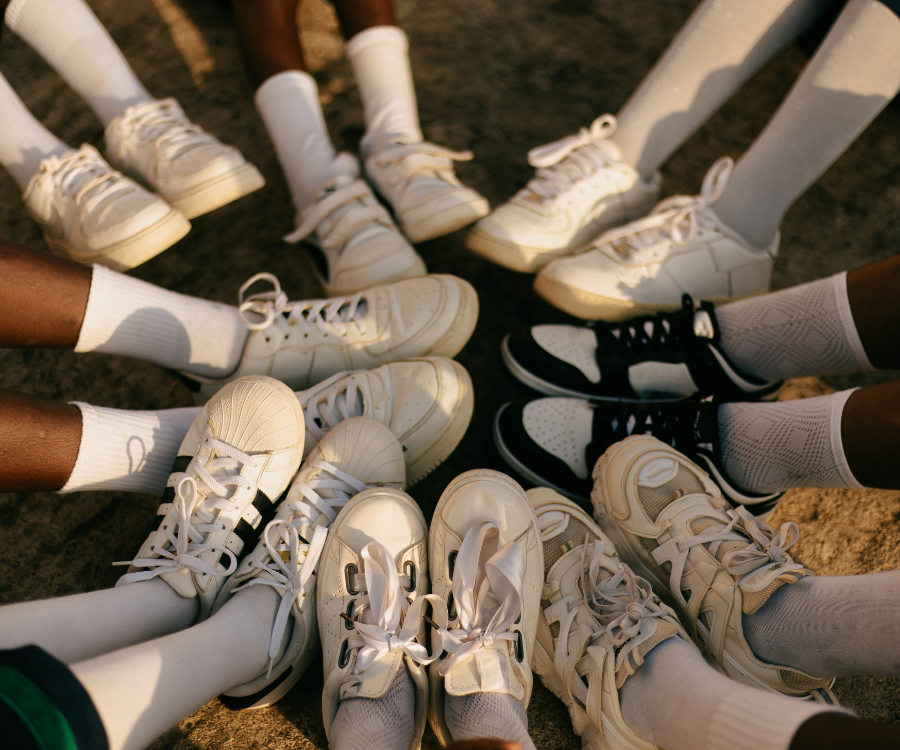
Children spend roughly 1,000 hours a year in their school shoes. From sprinting across the playground to standing in assembly line-ups, their shoes work overtime every single day.
Yet, during back-to-school shopping, fitting often takes a backseat to durability or brand preference. It’s easy to understand why: kids’ feet grow at astonishing speeds, and buying a pair “with room to grow” seems like a sensible money-saver.
However, professional shoe fitting isn’t just about comfort—it directly impacts your child’s skeletal development, posture, and long-term health.
1. Growing Feet Are Soft and Vulnerable
A child’s foot isn’t just a smaller version of an adult foot. At birth, a baby’s foot contains mostly soft, pliable cartilage. As kids grow, these soft bones gradually fuse and harden (ossify)—a process that isn’t fully complete until around age 18.
Because developing bones are flexible, a shoe that is too tight, narrow, or short can alter the natural shape of the foot without causing immediate pain.
Children often won’t complain about tight shoes because their nerve endings are still developing. By the time they mention discomfort, the shoe may have been causing friction or structural restriction for months.
Key Takeaway: If a shoe squeezes developing foot bones into an unnatural position, the foot can mold to the shape of the shoe rather than growing naturally.
2. The Physical Risks of Ill-Fitting School Shoes
When shoes don’t fit correctly, the consequences go far beyond temporary blisters.
| Problem | Cause | Potential Long-Term Impact |
| Ingrown Toenails | Shoes too short or tight in the toe box | Chronic pain, nail bed infection |
| Hammer Toes & Clawing | Shoes too short (forcing toes to curl) | Permanent joint deformity, reduced flexibility |
| Poor Posture & Joint Pain | Inadequate arch or heel support | Knee, hip, and lower back alignment issues |
| Hypermobility / Flat Feet | Lack of structural support during growth | Ankle strain, fatigue, balance issues |
| Friction Blisters & Calluses | Shoes too loose (foot slips inside shoe) | Persistent skin damage, altered gait |
3. Length Isn’t Everything: The 3D Nature of Shoe Fitting
When parents check shoe sizes at home, they usually press down on the big toe to see where it lands. While length matters, a proper fitting evaluates three distinct dimensions:
           ┌─────────────────────────────────────────┐
           │          3D SHOE FITTING CHECK          │
           └────────────────────┬────────────────────┘
                                │
       ┌────────────────────────┼────────────────────────┐
       ▼                        ▼                        ▼
  1. LENGTH                2. WIDTH                 3. DEPTH
  • ~1cm - 1.5cm growing   • No bulging over sides  • Instep fits comfortably
    room at toe box        • Toes spread naturally  • Fastener closes securely
- Width: Children’s feet come in wide, narrow, and standard proportions. A shoe that is the correct length but too narrow will pinch the sides of the foot, while a shoe that is too wide causes the foot to slide forward, smashing the toes against the front.
- Depth: High insteps need extra volume inside the upper shoe. If a shoe lacks depth, the top of the foot experiences pressure, leading to restricted circulation.
- Heel Grip: The heel counter (the rigid back of the shoe) should hold the heel snugly. If the heel slips out with every step, the toes will naturally “claw” to grip the footbed, causing strain on the plantar fascia.
4. How Often Should You Measure Their Feet?
Children experience rapid growth spurts that occur in unpredictable bursts rather than steady growth lines.
- Ages 1 to 3: Measure every 8 to 12 weeks (feet can grow up to 2 full sizes a year).
- Ages 4 to 10: Measure every 3 to 4 months (feet typically grow 1 to 1.5 sizes a year).
- Ages 11+: Measure every 6 months until growth plates close in late adolescence.
5. Quick At-Home Checklist for School Shoe Fitting
If you are buying school shoes or checking if last term’s pair still fits, use this 5-step evaluation checklist:
- The Thumb Rule: Have your child stand up straight with weight evenly distributed on both feet. There should be a thumb’s width (roughly 1cm to 1.5cm) of clearance between the longest toe and the end of the shoe.
- The Heel Snugness Test: Hold the ankle while your child lifts their foot. Gently pull down on the shoe heel—there should be minimal movement or slipping.
- The Pinch Test (Width Check): Lightly pinch the leather across the widest part of the foot (near the toe joints). You should be able to pinch a small ripple of leather. If it’s drum-tight, the shoe is too narrow; if there’s a large fold, it’s too wide.
- The Natural Stride Check: Watch your child walk up and down a hallway without socks or shoes, then watch them walk in the new shoes. Their gait should look identical—no shuffling, clacking heels, or altered arm swings.
- End-of-Day Fitting: Always fit shoes in the late afternoon or evening. Feet naturally swell throughout the day by up to 5% due to activity and heat. Fitting shoes in the morning can result in a pair that pinches by lunchtime.
Final Thoughts
School shoes are an investment in your child’s physical health and everyday comfort. Taking the extra 15 minutes to get professionally measured—or carefully checking all three dimensions at home—protects developing bones and lets kids focus on learning, playing, and growing without pain.

No comment